
We Strengthen Your Business
PVD Coating
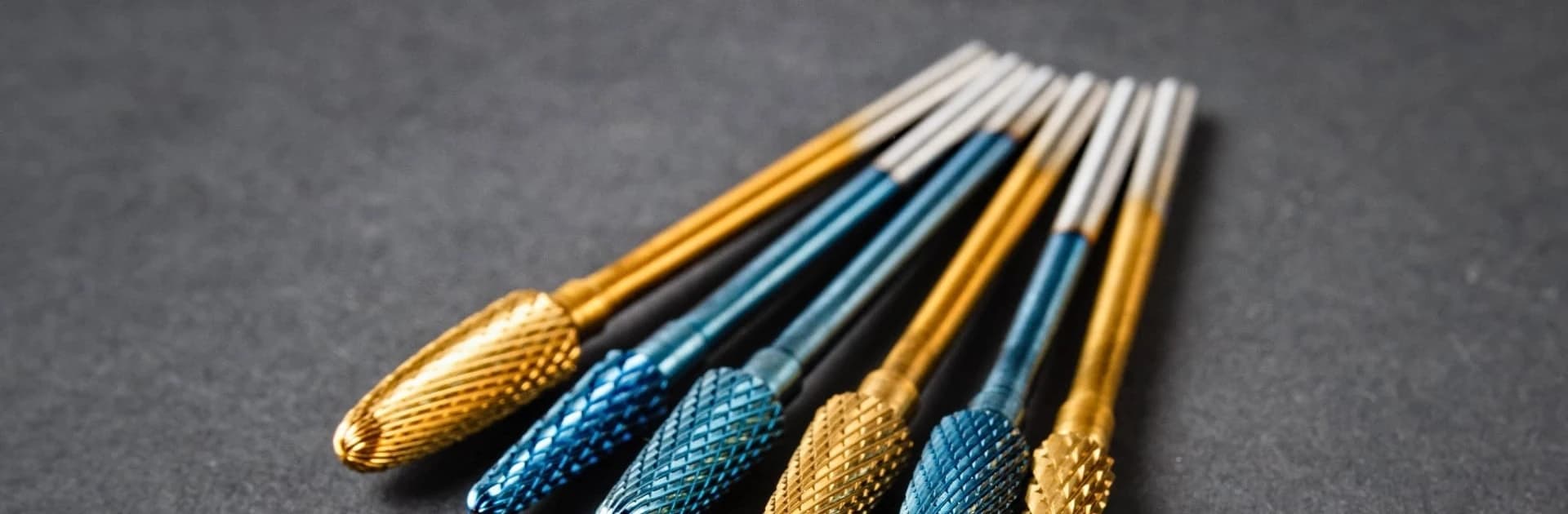
The PVD Thin Film Coating technique, defined as the Physical Vapor Deposition method, is based on the principle of turning the solid material into plasma with high energy and scattering it in a vacuum environment three dimensionally and thus depositing it on the base material with the desired thickness at nanometer level in a controlled manner. Materials coated as thin films exhibit the elastic properties of the base material.
PVD coating is applied to achieve the following benefits
- High wear resistance
- High hardness
- Chemical resistance
- Improving surface quality
- Low thermal conductivity
- Low coefficient of friction
- Modification of adhesion behavior
- 3D homogeneous coating pattern
By using the specially designed PVD Coating and Plasma Cleaning System within our company, coating services are offered for applications in various fields, especially electronics, optics, machining and automotive. The system provides 2 separate coatings at the same time or in layers on top of each other thanks to its double magnetron configuration supported by RF and DC power supplies. In addition, plasma cleaning process can also be realized with the same system.
Using this system, metal and ceramic coatings can be applied to any solid surface: Metal Coatings (Ge, Ni, Au, Ag, Al, Cr, Ti, etc.), Ceramic Coatings (SiO2, GeO, Si3N4, etc.).
For applications requiring high purity and quality coatings, the vacuum chamber provides vacuum levels of up to 10⁻⁸ Torr. In this way, many metals can be coated with 99.99% purity without oxidation. In addition, alloys with the desired ratio can be obtained precisely by coating two different metals at the same time.
Silicon dioxide, titanium dioxide, silicon carbide and many other ceramic materials, which are normally difficult to obtain as coatings, can be effectively coated on the desired surface thanks to the RF power supply available in the system. In addition, by means of a quartz crystal sensor, the coating thickness can be measured in real time during the coating process with a precision of 0.1 nm.
Thanks to the rotary table system in the system, the parts previously arranged on the table can rotate both around itself and around the table axis during coating, so that all surfaces of the parts with complex and intricate shapes can receive homogeneous coating.
The quality of the coatings obtained is verified by electron microscopy and X-ray diffraction analysis. Our team, expert in coating technologies, also provides consultancy services when coatings with specific mechanical and optical properties are required.